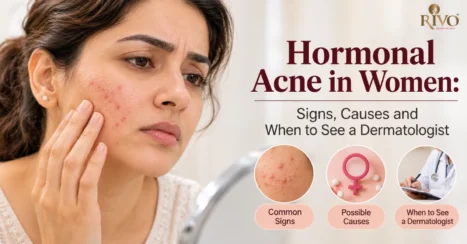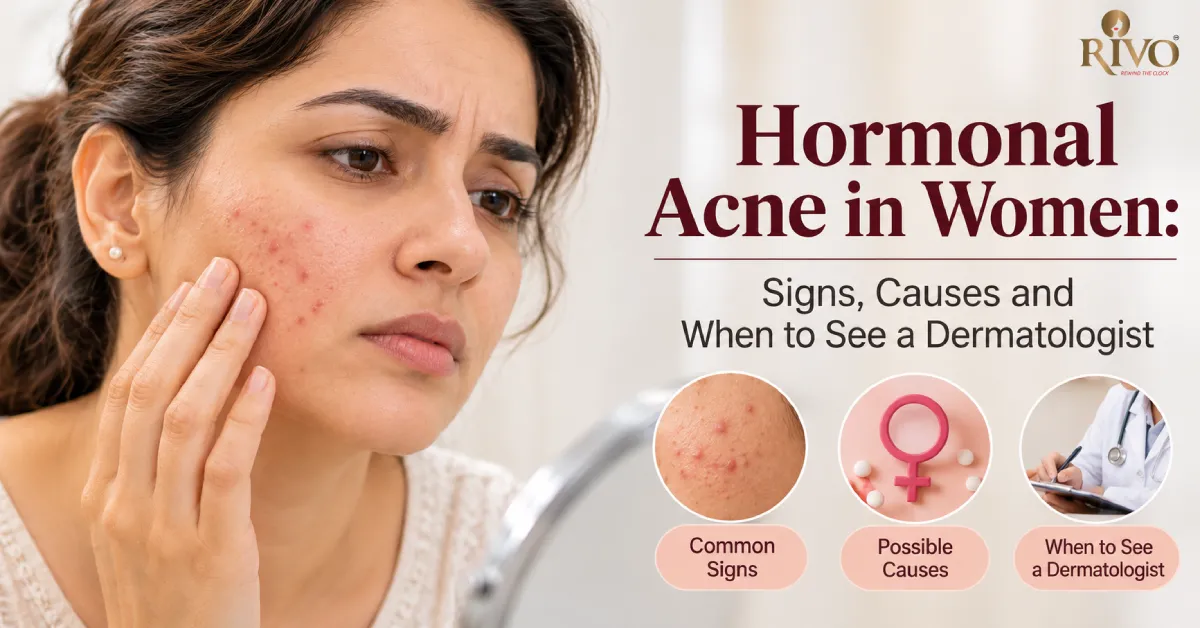
Some breakouts do not follow the usual rules. You wash your face, change products and eat carefully, yet the same spots return on your jawline every month. If this sounds familiar, you may be dealing with hormonal acne in women, which is common, frustrating and very treatable with the right guidance.
This guide explains what hormonal acne is, how to recognise it, what may be behind it, and what a dermatologist can do. It is general information and not a diagnosis. Your own pattern may differ, and a proper examination matters.
What Is Hormonal Acne?
Hormones affect how much oil your skin makes. When hormone levels shift, oil glands can become more active, and pores clog more easily. The result is acne that often shows up in a pattern linked to your cycle or life stage, not only your skincare. Dermatologists often see hormonal acne in women in their twenties, thirties and even forties, so it is not limited to teenage years.
How to Recognise It
Hormonal acne in women often has some of these features:
- Spots on the lower face, jawline, chin and around the mouth
- Deep, tender bumps under the skin, instead of surface whiteheads
- Flare-ups in the week before a period
- Breakouts that keep returning in the same places
- Acne that appears or worsens in adulthood
- Oily skin, along with irregular periods or excess facial or body hair
Having one of these signs does not prove it is hormonal. Look at the whole picture, including your cycle, stress levels and recent changes in medicines or products. That is why an examination helps.
Common Triggers Behind Hormonal Acne in Women
Menstrual cycle. Hormone levels change through the month. Many women notice more spots just before a period.
PCOS. Polycystic ovary syndrome is one of the conditions linked with acne, irregular cycles and excess hair growth. It needs a medical evaluation, and a skin treatment alone will not address it.
Stress. Stress can raise hormones that increase oil production.
Sleep. Irregular or short sleep can affect hormones and skin.
Medicines and supplements. Some medicines, and certain supplements, can trigger acne. Never stop a prescribed medicine without asking your doctor.
Pregnancy, postpartum and perimenopause. Hormones change a lot in these phases, and skin often responds. Many women are surprised when it appears for the first time after thirty, even with clear skin earlier in life.
Products. Heavy creams and some cosmetics can block pores and add to breakouts.
Hormonal Acne vs Regular Acne
| Feature | Hormonal acne | Common acne |
| Usual area | Jawline, chin, lower face | T-zone and cheeks |
| Type of spots | Deep, tender, under the skin | Blackheads, whiteheads, small pimples |
| Pattern | Cycle-linked, recurring | More constant |
| Age | Often adult | Often teen years |
| Response to skincare alone | Often limited | Often better |
This table is a rough guide. Many people have a mix of both, and only a dermatologist can tell which is which.
What You Can Do at Home About Hormonal Acne in Women
Good habits will not cure hormonal acne in women, but they can support any treatment you follow.
- Cleanse gently twice a day and avoid harsh scrubs.
- Use a non-comedogenic moisturiser, even if your skin is oily.
- Wear sunscreen daily, because acne marks darken in the sun. See our guide on sunscreen in winter.
- Do not pick or squeeze, since it causes marks and scars.
- Change pillowcases and wipe your phone regularly.
- Keep a simple diary of your breakouts, your cycle and any new products.
The diary is one of the most useful things you can bring to a consultation, because patterns become visible. Note the dates of your periods, the days spots appear, any new medicines, and how well you slept. Even a month or two of notes gives your dermatologist a much clearer picture.
What a Dermatologist May Do
A dermatologist starts by understanding your history, your cycle and your skin. Depending on what they find, the plan may include:
- A prescribed routine for the skin, with creams or medicines suited to your case
- Advice on tests, or referral to a gynaecologist or endocrinologist if a hormonal condition is suspected
- Treatments in the clinic to support the skin while medicines work
- Guidance on aftercare and marks
Please do not start prescription acne medicines without being examined, and do not borrow a friend’s tablets or creams. What helped her skin may harm yours. Some are not suitable in pregnancy or while trying to conceive. A doctor will ask about this first.
Clinic Treatments That May Be Discussed
Medicines usually lead the plan, while procedures support it. These may be discussed after assessment:
| Option | What it is generally used for |
| Medical facial | Skin health and congestion, planned around active acne |
| HydraFacial | Cleansing and hydration for congested skin |
| Carbon peel | Oil and surface congestion in some skin types |
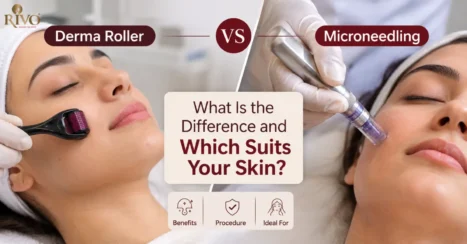
| Microneedling | Texture and scars, usually once active acne is calm |
Not every option suits active, inflamed acne. Some are better saved until the skin settles. Our page on acne and acne scar treatment explains how scars and active acne are handled differently. For marks left behind, a dermatologist can advise, and you can read about dark spot removal options on our site.
Results differ from person to person, and hormonal acne often needs patience. Anyone promising quick, guaranteed clearance should be treated with caution.
Hormonal Acne in Women and Diet
Food does not cause hormonal acne in women on its own, but some people notice links. Others do not. A balanced diet with enough protein, fibre, fruit and vegetables is a sensible base. Rashmy Naik, Aesthetic, Diet & Nutrition Consultant at Rivo Skin Clinic, works with patients on diet and lifestyle guidance, which can sit alongside medical care for conditions such as PCOS. No diet replaces treatment.
Excess Hair and PCOS-Linked Concerns
Some women with hormonal acne also notice extra hair on the face or body. If this applies to you, mention it at the consultation. Laser can reduce hair at the follicle, but it does not treat the hormonal cause, so a few people need occasional maintenance sessions. You can read more on our laser hair removal page.
Winter and Hormonal Acne
Cooler months bring dryness, and some people over-treat acne with harsh products. This can break the skin barrier and make spots worse. Keep the routine simple and moisturise. Our winter skin care routine explains how to adjust.
When to See a Dermatologist
Do not wait if you notice any of these signs of hormonal acne in women:
- Deep, painful cysts or nodules
- Acne that leaves scars or dark marks
- Irregular periods, rapid weight change or excess hair along with acne
- No improvement after six to eight weeks of a simple routine
- Acne that is affecting your confidence or mood
Hormonal Acne Treatment in Mumbai
Searching online for hormonal acne treatment in Mumbai can feel overwhelming, since every clinic claims quick results. If you are looking for hormonal acne treatment in Mumbai, begin with a consultation, so your skin and history are looked at together. Rivo Skin Clinic has a Mumbai clinic near Oberoi Mall in Malad East, and a Navi Mumbai clinic in Seawoods. You can read more about Rivo before you visit.
Frequently Asked Questions (FAQs)
Location, tender deep spots and cycle-linked flare-ups can point to a hormonal link, but only an examination can confirm it. A dermatologist can look at your pattern and history.
Hormonal acne in women can often be controlled with the right plan, though it may return when hormones shift. Ongoing care and follow-up matter more than a one-time fix.
PCOS is linked with acne in some women, along with irregular periods and excess hair. If you suspect it, get a medical evaluation instead of treating only the skin.
Some can irritate the skin or cause marks. Speak to a dermatologist before trying anything strong, and never apply undiluted ingredients to inflamed skin.
Many acne medicines are not suitable in pregnancy. Always tell your dermatologist if you are pregnant or planning a pregnancy before any treatment.
It varies. Routine changes can take weeks to show, and some plans take a few months. Your dermatologist will explain what to expect.
Book a Consultation at Rivo Skin Clinic
Struggling with hormonal acne in women that keeps coming back? Book a consultation and a dermatologist will examine your skin and explain what is suitable for you.
📞 +91 9833431663 📞 +91 8850661962
📍 Mumbai: Malad East, Near Oberoi Mall (Goregaon East)
📍 Navi Mumbai: Seawoods, Sector 44A