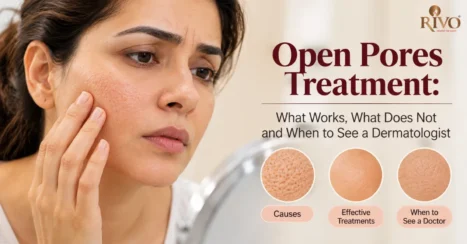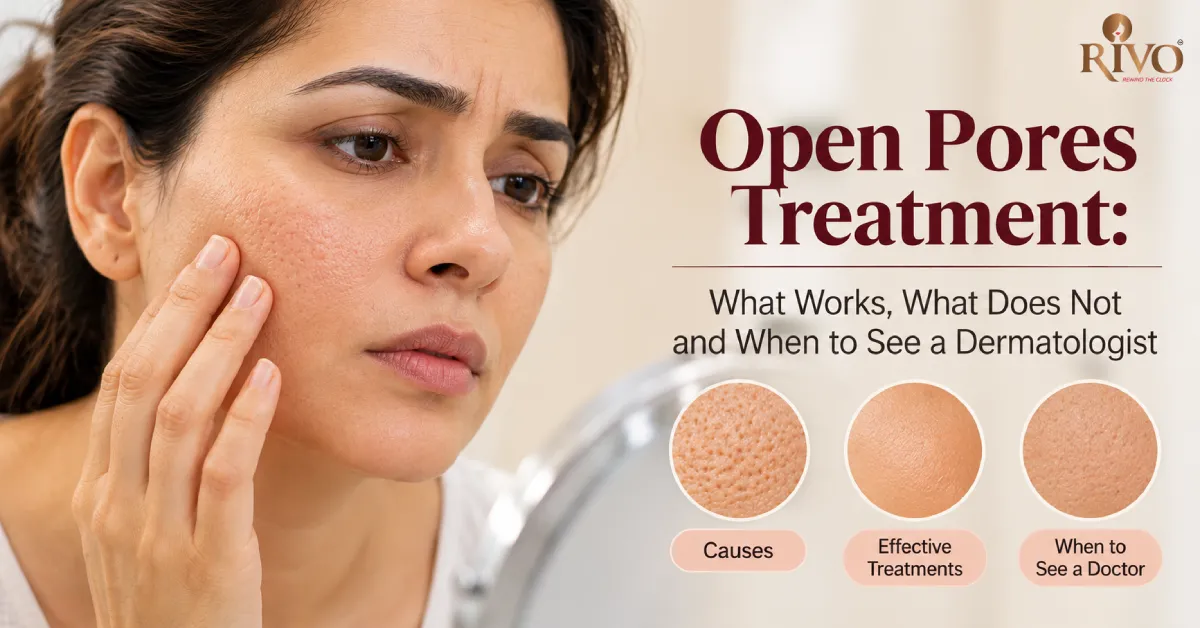
Few skin concerns get more attention than pores. You lean towards the mirror, see tiny dots across your nose and cheeks, and wonder whether something is wrong. Usually nothing is. Pores are a normal part of skin. But they can look larger for reasons you can influence, and that is where the right open pores treatment can help.
This guide explains what pores are, why they look bigger on some people, which habits make them worse, and which clinic options a dermatologist may discuss. It is general information and not a diagnosis.
First, Can Pores Really Be Closed?
This is the most common question, so the honest answer comes first. Pores are openings for hair follicles and oil glands. They do not open and close like doors, so no product or treatment can shut them. What an open pores treatment can do is make them look smaller by clearing oil and dead skin from inside them, and by improving the skin around them.
Anyone who promises that pores will vanish is overselling. A realistic goal is skin that looks smoother and less congested, and the first step is to understand how to reduce open pores without damaging the skin barrier.
Why Do Pores Look Bigger?
Excess oil. Oily skin has larger-looking pores because oil stretches them. Genetics decide a lot here.
Clogged pores. Dead cells and oil can build up inside a pore, making it look wider and darker at the surface.
Loss of firmness. As collagen slows with age, the skin around a pore loses support, and the opening can look more visible.
Sun damage. UV breaks down collagen and thickens the surface, which can make pores stand out.
Acne and scarring. Past breakouts can leave pitted marks that look like large pores. Our page on acne and acne scar treatment explains the difference.
Humidity and heat. Mumbai’s weather encourages sweat and oil, so pores often look worse in the warmer months.
Open Pores Treatment by Skin Type
The right plan depends on your skin, so here is a simple guide.
| Skin type | What tends to happen | General direction |
| Oily | Visible pores on nose and cheeks, shine by afternoon | Gentle cleansing, oil control, regular exfoliation as advised |
| Dry | Pores look larger because the skin looks dull and thin | Hydration and barrier care before anything strong |
| Combination | Large pores in the T-zone only | Different care for different zones |
| Acne-prone | Clogged pores, blackheads and whiteheads | Treat acne first, then texture |
This is not a prescription. If you are unsure of your skin type, a dermatologist can tell you in a few minutes.
How to Reduce Open Pores With a Simple Routine
If you are wondering how to reduce open pores at home, the answer is mostly consistency. Here is a basic plan that suits most skin types.
Morning: gentle cleanser, light moisturiser, sunscreen.
Night: cleanser to remove sunscreen and dirt, then moisturiser. If your dermatologist advises it, add an exfoliating acid or a retinoid slowly, a few nights a week.
Give any new product at least four to six weeks before judging it, and change only one thing at a time. If you want to know how to reduce open pores faster, resist the urge to add more products. Over-treating usually makes pores look worse, not better.
Habits That Help
Good habits do more for pores than most people expect, and they help any open pores treatment last longer.
- Cleanse twice a day with a gentle cleanser that suits your skin.
- Use sunscreen daily, since UV damage makes pores look bigger. See our guide on sunscreen in winter.
- Always remove sunscreen and makeup at night.
- Use a non-comedogenic moisturiser, even if your skin is oily.
- Introduce exfoliating ingredients slowly, one at a time.
- Keep your hands away from your face.
Habits That Make Pores Look Worse
When people ask how to reduce open pores, they are often surprised that stopping some habits works better than adding new ones.
- Squeezing blackheads, which can stretch the pore and cause marks
- Scrubbing hard with rough exfoliators
- Skipping moisturiser because the skin is oily, which can make it produce even more oil
- Sleeping with makeup on
- Using many strong actives at once
- Trying pore strips or home hacks regularly
What a Clinic May Offer
If home care is not enough, a dermatologist can look at your skin and suggest what suits it. These are some options that may be discussed.
HydraFacial. A HydraFacial cleanses, exfoliates and extracts impurities from the pores while hydrating the skin. It is a common choice for congested skin and dull texture.
Carbon peel. A carbon peel uses a carbon layer and a laser to clear oil and debris from the surface. It is often discussed for oily skin and visible pores.
Medical facial. A medical facial is planned around your skin concerns and can include steps that target congestion and texture.
Microneedling. Microneedling is sometimes considered when pores look larger because of texture or scarring, after assessment.
Laser toning. Laser toning is more often used for tone and pigmentation, and a dermatologist may combine it with other care.
Results differ from person to person, and the number of sessions depends on your skin. No treatment suits everyone, and a doctor will tell you what to expect before you begin. If you cannot tell whether your pores look large because of oil, acne marks or age, a consultation helps you avoid paying for the wrong thing.
How Long Do Open Pores Treatment Results Last?
Pores keep producing oil, so improvements need upkeep. Skipping aftercare, going out in strong sun without sunscreen, or squeezing the skin can undo the gains quickly. A treatment may leave skin looking cleaner for some time, but daily care and sun protection decide how long that lasts. Ask your dermatologist how often a repeat might be needed for your skin, instead of expecting a one-time fix.
Open Pores Treatment in Winter
Many people find their skin behaves differently in the cooler months. Oil may reduce, and dryness can show up, which can make skin look rough. Avoid stripping cleansers and heavy scrubs. Our winter skin care routine explains how to adjust. This is also a practical time to start a course, because you can protect the skin from strong sun while it recovers.
Who Should Check With a Dermatologist First
Some skin conditions need to be sorted out before anything else is done.
Speak to a dermatologist before any open pores treatment if you have:
- Active, inflamed acne or infected skin
- Eczema, psoriasis or very sensitive skin
- A tendency to keloid or dark marks after irritation
- A recent tan, sunburn or peeling
- Pregnancy
- Use of prescription acne medicines
Food, Hydration and Skin
Rashmy Naik, Aesthetic, Diet & Nutrition Consultant at Rivo Skin Clinic, works with patients on diet and lifestyle guidance. A balanced diet and good hydration support skin health, though food alone does not shrink pores. Tell your dermatologist about any supplements you take.
Open Pores Treatment in Mumbai and Navi Mumbai
If you are looking for an open pores treatment in Mumbai, start with a consultation so your skin is examined first. Rivo Skin Clinic has a Mumbai clinic near Oberoi Mall in Malad East, and a Navi Mumbai clinic in Seawoods. You can also read about Rivo before you visit.
Frequently Asked Questions (FAQs)
No. Pores cannot be closed. A suitable treatment can help them look smaller by clearing congestion and improving skin texture, and daily care keeps the effect going.
That depends on your skin. Options such as a HydraFacial or carbon peel may be discussed, but a dermatologist should decide after examining your skin.
No. It can stretch the pore, cause marks and lead to infection. A doctor can advise on safe ways to remove them, and extraction is best left to a trained professional.
Not really. Oil, dead cells, sun damage and genetics play a bigger role. Over-washing and scrubbing can make skin worse.
Most options cause mild discomfort at most, though it depends on the treatment and your skin. Ask what to expect at the consultation.
It varies by skin type and concern. A dermatologist can give a realistic plan after seeing your skin.
Book a Consultation at Rivo Skin Clinic
Looking for an open pores treatment that suits your skin? Book a consultation and a dermatologist will examine your skin and explain what is realistic.
📞 +91 9833431663 📞 +91 8850661962
📍 Mumbai: Malad East, Near Oberoi Mall (Goregaon East)
📍 Navi Mumbai: Seawoods, Sector 44A