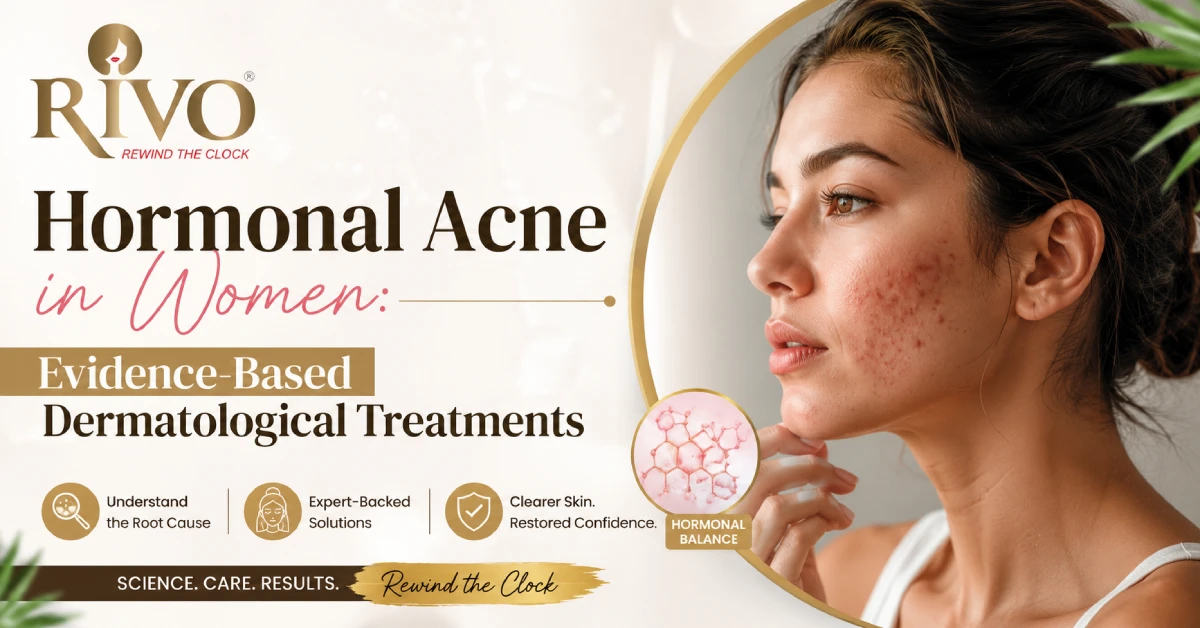
You have tried everything. The face wash. The spot treatment. The expensive serum your friend swore by. And still, every few weeks, those deep, stubborn breakouts show up — right along your chin and jawline, almost like clockwork.
If this sounds familiar, you are not dealing with ordinary acne. What you are likely experiencing is hormonal acne — and it behaves very differently from the teenage kind. The good news is that effective hormonal acne treatment for women exists, and once you understand what is actually driving those breakouts, getting your skin under control becomes a lot more realistic.
At Rivo Skin Care Clinic, we see this pattern every single day — women in their 20s, 30s, and even 40s who are exhausted from fighting acne that nobody seems to be taking seriously. This blog is for you.
Why Hormonal Acne Is Not the Same as Regular Acne
Most people assume acne is acne. But hormonal acne has a very specific cause: fluctuating levels of androgens (male hormones that women also produce) that tell your oil glands to work overtime. When sebum production spikes, pores get clogged, bacteria multiply, and inflammation sets in — often deep under the skin where no spot cream can reach.
What makes it worse for women is that hormone levels naturally shift throughout the month, not just once. Your skin can be perfectly calm for two weeks and then erupt right before your period. Or it could flare after stopping birth control. Or slowly get worse as you approach your mid-30s. All of these are classic signs that hormonal acne treatment for women — not a random new cleanser — is what your skin actually needs.
Common hormonal triggers include:
- Monthly menstrual cycle fluctuations
- Polycystic Ovarian Syndrome (PCOS)
- Pregnancy, postpartum, and breastfeeding
- Perimenopause and menopause
- Starting, stopping, or switching birth control
- High stress levels (cortisol raises androgen activity)
📖 Also Read: Acne and Acne Scar Treatment at Rivo Skin Care Clinic
How to Tell If Your Acne Is Hormonal
Before diving into treatment, it helps to be sure you are dealing with hormonal acne and not something else. Here is what typically sets it apart:
What You Notice | What It Usually Means |
Breakouts along the chin, jaw, and neck | Strong hormonal connection |
Acne that appears or worsens before your period | Linked to progesterone surge |
Deep, painful cysts — not surface pimples | Inflammation driven by androgens |
Acne that started or worsened in your 20s or 30s | Adult hormonal acne pattern |
Accompanied by irregular periods or excess hair growth | Possible PCOS involvement |
If most of these match your experience, then targeted hormonal acne treatment for women is the right path forward — not another round of trial-and-error products.
Why Nothing From the Pharmacy Is Working
Here is something we tell patients often: over-the-counter acne products are designed for surface-level breakouts. They work reasonably well for blackheads, mild teenage acne, or clogged pores. But hormonal acne is built from the inside out.
Salicylic acid and benzoyl peroxide can reduce some inflammation at the surface, but they cannot regulate how much sebum your glands are producing. They cannot balance your androgen levels. And they certainly cannot reach a cyst that is sitting deep beneath the skin.
This is exactly why so many women spend years trying different products with little to show for it. Professional hormonal acne treatment for women works because it addresses the actual cause — not just what you can see in the mirror.
Treatments That Actually Work — What Dermatologists Recommend
➡️ Topical Retinoids
Retinoids are one of the most trusted tools in dermatology, and for good reason. They speed up skin cell turnover, prevent dead cells from clogging pores, and reduce the kind of deep inflammation that makes hormonal acne so painful.
Prescription retinoids are significantly stronger than anything available over the counter. They do require some adjustment — your skin may purge or become sensitive initially — but used correctly under dermatologist guidance, they are a cornerstone of effective hormonal acne treatment for women.
🔗 Related: Skin Rejuvenation Treatments at Rivo
➡️ Hormonal Medications
Since androgens are the root cause for most women, medications that lower androgen activity can be genuinely life-changing.
Certain oral contraceptive pills have been clinically approved for acne treatment and are particularly helpful when a woman is also looking for contraception. Anti-androgen medications like spironolactone work differently — they block the androgen receptors in oil glands so that even if androgen levels are elevated, your skin reacts less dramatically.
These are prescription-only options and require proper blood work and a clinical assessment before starting. But for women with moderate to severe hormonal acne, they are among the most effective long-term solutions available.
➡️ Chemical Peels
Chemical peels are often underestimated, but they deliver impressive results for hormonal acne — especially when post-acne marks and uneven tone are part of the picture.
A dermatologist applies a controlled exfoliating solution to remove the damaged outer layers of skin, clear blocked pores, and stimulate fresh cell growth underneath. Salicylic acid peels work particularly well for oily, acne-prone skin because salicylic acid is oil-soluble — meaning it can penetrate into the pore itself and clean it out from inside.
Regular peel sessions as part of a broader hormonal acne treatment for women plan help:
- Reduce active breakouts between hormonal cycles
- Lighten stubborn dark spots left by old pimples
- Improve skin texture and overall clarity
- Keep pores clean and less prone to clogging
🔗 See Also: Carbon Peel at Rivo Skin Clinic
➡️ Laser Toning and Light Therapies
Laser treatments have become an important part of modern hormonal acne treatment for women, especially for those who have not responded well to topical or oral options, or who want to speed up results.
Laser toning works by targeting the sebaceous glands directly — reducing their activity so they produce less oil — while also destroying acne-causing bacteria beneath the surface. Over a series of sessions, it also helps fade the pigmentation that hormonal acne tends to leave behind.
At Rivo, we use advanced technology including the Tribeam Q-Switch Laser, which is precise, effective, and safe for Indian skin tones. Here is a quick overview of how different light-based therapies work:
Treatment | Primary Benefit |
Q-Switch Laser | Fades acne pigmentation, improves skin tone |
Laser Toning | Reduces oil, controls bacteria, brightens skin |
Fractional Laser | Treats acne scars and uneven texture |
IPL (Intense Pulsed Light) | Reduces redness and surface marks |
➡️ Microneedling for Acne Scarring
Once your hormonal acne is under control, the next challenge is often the scars it leaves behind. Microneedling is one of the most effective ways to address this.
The treatment uses tiny, controlled needles to create micro-channels in the skin, triggering the body’s natural collagen production response. Over the following weeks, the skin repairs itself — filling in depressed scars, smoothing out texture, and reducing the appearance of enlarged pores.
It is not a treatment for active, inflamed acne, but once breakouts are managed, microneedling is an excellent next step in completing your hormonal acne treatment for women journey. Most women see meaningful improvement after three to four sessions.
➡️ HydraFacial as a Maintenance Treatment
Managing hormonal acne is not just about aggressive treatment — maintenance matters too. HydraFacial is a gentle, deeply cleansing facial that extracts congestion from pores, delivers hydrating serums, and keeps skin calm between breakout cycles.
For women with hormonal acne, regular HydraFacial sessions help prevent the buildup that leads to new breakouts, support skin barrier health, and give the skin a clean, refreshed appearance — all without irritating already sensitive skin.
The Diet and Stress Connection Nobody Talks About Enough
Clinical treatments do the heavy lifting, but what you eat and how you manage stress can either support your results or quietly undermine them.
High-glycaemic foods — white rice, sugary drinks, processed snacks, maida-heavy meals — spike insulin, which in turn raises androgen levels. Some research also links dairy, particularly skimmed milk, to acne flares in susceptible women.
Stress is just as significant. When cortisol rises, it amplifies androgen activity — which is why many women notice more breakouts during stressful periods at work or during emotionally difficult phases. Incorporating consistent sleep, some form of movement, and stress reduction alongside your hormonal acne treatment for women plan can make a noticeable difference in how your skin responds.
What a Consultation at Rivo Actually Looks Like
We know that walking into a clinic feeling frustrated and self-conscious is not easy. At Rivo Skin Care Clinic, our approach to hormonal acne starts with actually listening — understanding your skin history, your cycle, your lifestyle, and what you have already tried.
From there, our dermatologists build a plan that is specific to your skin — not a generic protocol. This might combine topical treatments, in-clinic procedures, and lifestyle adjustments depending on how your acne presents and what your long-term goals are.
Follow-up appointments matter too. Hormonal acne management is not a one-and-done situation. Regular check-ins let us track how your skin is responding and adjust the approach when needed.
📖 Also Read: Causes of Sudden Acne Breakouts on Face
How Long Before You See Real Results?
This is the question every patient asks, and we always answer honestly. Results depend on the severity of your acne, the treatments being used, and how consistently you follow the plan. Here is a general idea:
- Topical retinoids: visible improvement usually around 8 to 12 weeks
- Hormonal medications: 3 to 6 months for significant change
- Chemical peels: noticeable improvement after 3 to 6 sessions
- Laser treatments: measurable difference after 4 to 6 sessions
Patience is genuinely part of the process. Hormonal acne did not develop overnight, and lasting hormonal acne treatment for women takes time to work through the cycle. But with the right plan in place, most women do see a real, lasting difference.
Conclusion
Hormonal acne is frustrating, persistent, and for many women, deeply affecting. But it is also very treatable — when approached the right way.
If your breakouts follow a pattern, cluster around your lower face, feel painful and deep, and have not responded to anything you have tried, it is time to stop guessing and get a proper assessment. Professional hormonal acne treatment for women is not about expensive products or aggressive procedures — it is about understanding your specific hormonal picture and building a plan around it.
At Rivo Skin Care Clinic, we have helped hundreds of women in Mumbai and Navi Mumbai get their skin back on track. If you are ready to stop managing and start actually clearing your acne, we would love to help.
Check out our before and after results — and when you are ready, book a consultation.
Frequently Asked Questions (FAQs)
There is no single best treatment — the most effective approach is usually a combination. Dermatologists typically start with topical retinoids and may add hormonal medications, chemical peels, or laser therapy depending on the severity and pattern of your acne.
Sometimes it improves after a hormonal shift — like after pregnancy or when PCOS is managed. But for most women, hormonal acne requires consistent, targeted hormonal acne treatment for women to keep breakouts under control long-term.
Not always, but PCOS is one of the most common causes of persistent hormonal acne in women of reproductive age. If your acne is accompanied by irregular periods, weight changes, or excess facial hair, it is worth getting a hormonal blood panel done.
The location is often the biggest clue — hormonal acne tends to appear along the chin, jaw, and neck. It is usually deep and cystic rather than surface-level, and it often worsens predictably before your period. A dermatologist can confirm this through a proper skin and hormonal assessment.
Yes, for many women it does. High-glycaemic foods and dairy can worsen acne by influencing insulin and androgen levels. While dietary changes alone are rarely enough to clear hormonal acne, they can meaningfully support your overall hormonal acne treatment for women plan.
Yes — when performed with the right equipment and by experienced professionals. At Rivo, we use US FDA-approved technology that is safe and effective for darker Indian skin tones, including for acne and pigmentation treatment.
Contact Rivo Skin Clinic
Tired of breakouts that keep coming back? Our team is here to help you figure out what is really going on with your skin — and build a plan that actually works.
📞 +91 9833431663 📞 +91 8850661962
📍 Mumbai: Goregaon East (Malad East), Near Oberoi Mall 📍 Navi Mumbai: Seawoods, Sector 44A
🌐 Book a Consultation | See Our Results | Explore All Treatments