Perhaps you are already familiar with the fight with acne. You give a new product a week, and after that some, your skin throws a fit. Acne, clogged pores, excess oil production — and for some, somewhere in between: what can be safely applied to the face?
One of the most popular searches for skin care products is currently face masks for acne prone skin — and it should be. The correct best face mask for acne skin can really determine whether you will have a pleasant week or a week of acne. The wrong one can make things a lot worse.
Every day, at Rivo Skin Clinic, we treat patients with acne. This guide focuses on what works, and not what is popular on Instagram.
How Masks Can Help With Acne-Prone Skin and Why This Skin Type Needs Special Care
Face masks have come in many different varieties. Popular masks often include cosmetically appealing ingredients that are comedogenic, or pore-clogging, and will cause breakouts on acne-prone skin.
It can be caused by coconut oil, heavy cream bases, some silicones or artificial fragrances. That’s why it’s not easy to pick the right best face masks for acne prone skin.
The bottom line for oily, acne prone skin is to clear pores, reduce excess oil production and soothe inflammation, without compromising skin barrier function or causing further congestion.
📖 Also Read: Hormonal Acne Treatment for Women — Expert Skin Guide
How to Choose the Best Face Masks for Acne Prone Skin
Here are some things that dermatologists consider when they recommend the best face masks for acne prone skin, before going into any specifics:
| Ingredient | What It Does |
| Salicylic Acid (BHA) | Unclogs pores, absorbs oil and exfoliates skin |
| Kaolin / Bentonite Clay | Absorbs excess sebum, removes impurities |
| Niacinamide | Reduces inflammation, controls oil production |
| Tea Tree Oil (low %) | Antibacterial, fights acne-causing bacteria |
| Centella Asiatica | Calms redness, soothes active acne |
| Hyaluronic Acid | Moisturizes and does not clog pores |
What to steer clear of: coconut oil, heavy emollients, artificial fragrance, high percentage algae extracts, PEG-based thickeners that may exacerbate congestion.
Best Face Masks for Acne Prone Skin — The Types That Work
➡️ 1. Clay Masks
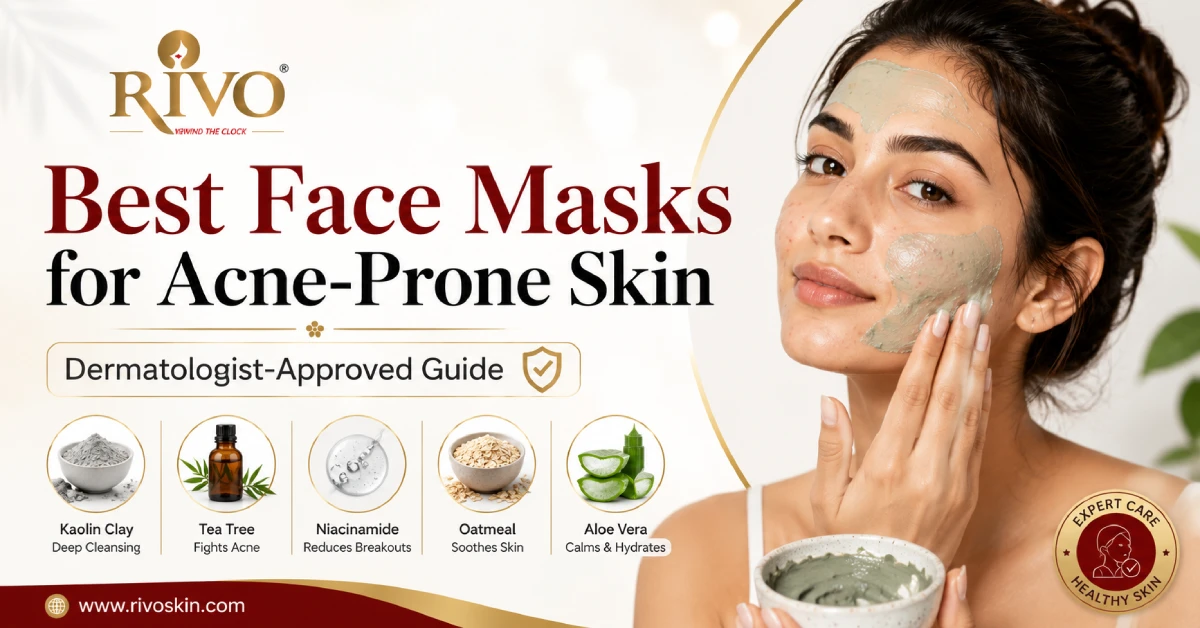
When choosing the best face masks for acne prone skin, clay masks are among the most dermatologist recommended. Kaolin and bentonite clay are especially beneficial as they physically remove oil, dirt and impurities from deep within the pores.
Bentonite clay mask is great for oily or combination skin, and helps to visibly reduce pores and shine 1–2 times per week. Kaolin clay does not dry the skin — it is gentler for sensitive skin prone to acne.
The important points to remember: clay masks should not be left on until they crack and stretch on the skin. To prevent it from drying out too much and causing an increase in oil production, remove when slightly damp.
➡️ 2. Salicylic Acid Masks
Salicylic acid is soluble in oil so it can penetrate the pore and dissolve the oil blocking material. That’s why it’s one of the most popular ingredients in the best face masks for acne prone skin category.
Masks containing 1–2% salicylic acid can help greatly with the reduction of blackheads, whiteheads and breakouts on the surface of the skin, and can be applied once or twice weekly. They are particularly useful for individuals who experience frequent congestion in the nose, chin and forehead.
➡️ 3. Sulphur Masks
Sulphur itself has been a popular ingredient in skincare for years and is one of the most effective ingredients for inflammatory acne. The process works by inhibiting the growth of bacteria that can cause acne and by decreasing the amount of oil that is produced — two primary causes of acne.
Sulphur masks have a strong odor, but for individuals who suffer from cystic or inflammatory acne, the benefits are worth it. They are one of the neglected best face masks for acne prone skin options that dermatologists really recommend.
➡️ 4. Hydrogel Masks
Hydrogel masks are gaining popularity these days — it’s a definite plus for acne-prone skin compared to regular sheet masks. The standard type of sheet masks are made of fabric which is saturated in essence, and this may need the use of emulsifiers and stabilisers that can be comedogenic.
This is a problem that is avoided by hydrogel masks. The active ingredients go directly into the skin and do not require pore-clogging carriers, making them a safer option for individuals with acne-prone skin who look to hydrate without plugging.
Niacinamide, centella asiatica, or low molecular hyaluronic acid are all ingredients to seek out in hydrogel masks.
➡️ 5. Green Clay or Multani Mitti Masks
Green clay and multani mitti (Fuller’s Earth) are used in Indian skin care since centuries and there is authentic science behind the reason why it works for people with oily and acne-prone skin. They both soak up excess sebum, unclog pores and soften skin without using harsh chemicals.
These are among the readily available best face masks for acne prone skin choices dermatologists don’t rule out, when used as part of a consistent routine. They are best used in combination with rose water — and not lemon juice, which may cause irritation and skin barrier damage.
What Dermatologists Actually Say About Face Masks and Acne
The truth is — face masks won’t resolve severe acne. They are a supportive measure and not a solution. These can be used as a part of a good skin care program and in conjunction with clinical treatment when required.
These are the people who experience the best results from a Rivo Skin Clinic at-home masking regime:
- Properly cleaning twice a day
- Wearing a non-comedogenic moisturiser
- Using products recommended by a dermatologist to treat active acne outbreaks
- Seeking professional treatments as necessary
Which leads to the clinical choices that are more substantial than any mask.
💬 Constantly having to deal with acne? Book a consultation at Rivo Skin Clinic. 📞 +91 9833431663 | +91 8850661962
When At-Home Masks Are Not Enough — Clinical Treatments at Rivo
Great at-home best face masks for acne prone skin are great for maintenance. However, if you suffer from moderate to severe acne, from cystic acne to recurring acne, a professional treatment is going to give you results that any mask cannot!
➡️ HydraFacial for Acne-Prone Skin
One of the best treatments for acne-prone skin at Rivo is HydraFacial. It cleanses, exfoliates, removes congestion from pores and soaks in hydrating and clarifying serums all in one.
HydraFacial is designed for people with sensitive skin and acne prone skin — unlike many facials, it does not aggravate active acne. It goes deeper with clinically-grade ingredients and technology that no at-home mask can replicate.
💬 Want clearer skin without harsh treatments? Book a HydraFacial consultation at Rivo Skin Clinic today. 📞 +91 9833431663 | +91 8850661962
➡️ Carbon Peel for Acne-Prone Skin
The Carbon Peel — otherwise known as the Hollywood Peel — works best for oily, acne-prone skin. Medical grade liquid carbon is applied to the skin, where it gets absorbed into the pores. A laser is then used to traverse the skin, oxidizing the carbon and the oil, bacteria and impurities the carbon has taken up.
The result: visibly diminished pores, lesser oil production and a noticeable decrease in the amount of acne-causing bacteria. Individual carbon peel treatments provide results that are not achievable with the best face masks for acne prone skin at home.
➡️ Medical Facial for Acne
Medical Facial at Rivo is a personalized facial done by a dermatologist utilizing clinical level products and technology. This usually involves a deep cleanse, targeted extraction and treatment with ingredients that are not found in over-the-counter products for acne prone skin.
Medical facials every 2–3 weeks may bring acne to a significant end for those who suffer from frequent breakouts — which is more than what any at-home masking routine can do.
🔗 Related: Best Facial Treatments for Glowing Skin — Rivo’s Expert Guide
Monsoon Season and Acne-Prone Skin — A Special Note
Mumbai has a humidity of more than 85% in July. This, combined with the inability to sweat and the congestion of pores, is the perfect set-up for acne prone skin.
The best face masks for acne prone skin to turn to during the monsoon season are:
- Clay mask — 2 times a week to absorb excess oil
- Salicylic acid masks — to prevent the build-up of congestion as pores block more rapidly
- Lightweight hydrogel masks — to keep skin hydrated, not oily
Heavy cream masks, oil-based masks or any coconut oil-based mask should be avoided during the monsoon season — they will make oily and acne-prone skin a lot worse.
How Often Should You Use a Face Mask for Acne?
One of the most common mistakes is to use the best face masks for acne prone skin too often. The use of over-masking, particularly clay or active masks, can remove the skin barrier — leading to a rebound effect that boosts oil production and increases acne.
The general guidelines offered by dermatologists:
- Clay or salicylic acid masks: once or twice a week at the most
- Hydrogel or hydrating masks: up to 3 times a week
- Sulphur masks: 1–2 times a week with moisturiser following
Always use a non-comedogenic moisturiser with any type of mask — even oily skin needs moisturising!
🔗 Also Read: Acne and Acne Scar Treatment at Rivo Skin Clinic
Frequently Asked Questions (FAQs)
The most common options include clay masks with kaolin or bentonite, salicylic acid masks, sulphur masks, and hydrogel masks with niacinamide or centella asiatica. These reduce oil production without clogging pores or compromising the skin barrier.
Face masks may clear the pores and help to reduce oiliness, but they cannot cure moderate to severe acne. They are most effective when used in conjunction with a proper skincare routine and, if necessary, clinical treatment.
Clay or salicylic acid masks are best applied 1–2 times a week. Excessive use will dry out the skin and lead to an increase in oily sebum production and breakouts.
Older sheet fabric masks may have pore-clogging ingredients. Hydrogel masks are a safer option for acne-prone skin because they don’t need to rely on comedogenic ingredients to deliver actives to the skin.
Yes — multani mitti (Fuller’s Earth) is a dermatologically recommended option for Indian skin prone to acne and oiliness. It absorbs excess sebum and unclogs pores. Use rose water instead of lemon juice to avoid skin barrier damage.
If you have moderate to severe, cystic, or hormonal acne, or if your skin does not improve with a proper skin care regimen, it is time to visit a dermatologist. Clinical treatments go much deeper than the best face masks for acne prone skin available at home.
Contact Rivo Skin Clinic
If your breakouts are ongoing despite every mask you’ve tried, it is time to get to the root cause. Your skin will be evaluated and a treatment course created based on what is actually happening — not just the surface.
📞 +91 9833431663 📞 +91 8850661962
📍 Mumbai: Goregaon East (Malad East), Near Oberoi Mall 📍 Navi Mumbai: Seawoods, Sector 44A
🌐 Book a Consultation | See Our Results | Explore All Treatments