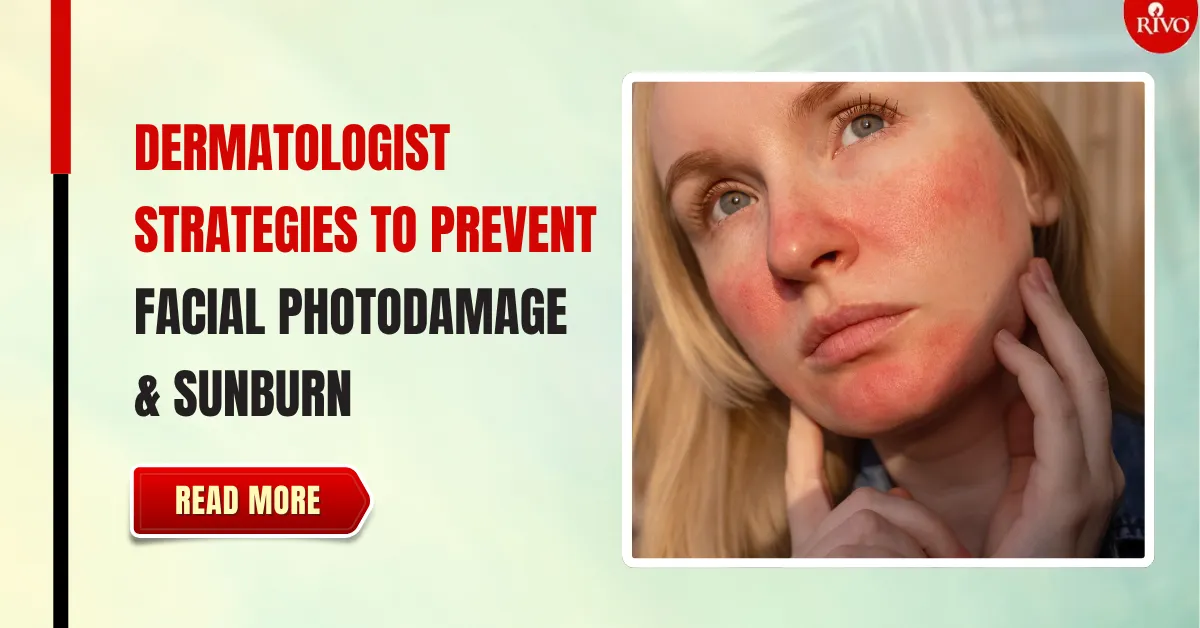
One of the biggest causes of prematurely aged skin, skin damage, skin tone issues and pigmentation is UV exposure. Excessive exposure to the sun’s ultra-violet radiation can permanently damage the skin, particularly the face, in addition to causing the skin to create Vitamin D. Too much exposure to the sun can cause a variety of issues, such as redness, tanning, irritation and peeling for many people. This is the reason why it is vital to know how to avoid sunburn on face so you can have a healthy, youthful skin.
We dermatologists can always stress prevention, as with permanent sun damage, it can be difficult to fix the damage with treatments. Our Rivo Skin Clinic professionals teach patients how to protect themselves from the sun to minimize the risk of sunburn, pigmentation, wrinkles and long term photodamage.
Today we will be talking about how to keep your facial skin safe from the harmful UV rays of the sun along with dermatologist recommended methods to avoid facial sunburns all year round in this comprehensive guide.
Understanding Facial Photodamage and Sunburn
It is essential to know what happens when skin is exposed to too much sunlight, before knowing how to avoid sunburn on face.
Sunlight contains:
- UVA Rays
- UVB Rays
- Visible Light
- Infrared Radiation
Of these, it is UVB rays that are most responsible for causing sunburn; UVA rays penetrate deeper, leading to ageing, pigmentation, and collagen loss.
If skin is exposed to excessive amounts of UV radiation, it will react by:
- Redness
- Inflammation
- Tenderness
- Peeling
- Burning sensation
- Increased pigmentation
Frequency leads to premature skin ageing and a risk of skin cancer.
Why Facial Skin Is More Vulnerable
The face is exposed for most of the day, and is typically exposed to a higher level of sun than other parts of the body.
These are the factors that can make your skin more susceptible to sun damage around your face:
- Daily outdoor activities
- Driving
- Walking to work
- Outdoor sports
- Beach vacations
- Rooftop exposure
- Reflection in water, glass and concrete surfaces
The frequent exposure, makes it imperative to learn how to avoid getting sunburnt on the face.
Dermatologist Strategy #1: Use Broad-Spectrum Sunscreen Daily
The best answer for how to avoid getting sunburnt on your face is to apply the sun cream regularly.
Dermatologists recommend:
Sunscreen Feature | Recommendation |
SPF | SPF 30 or higher |
Protection | Broad-spectrum UVA & UVB |
Skin Type | Suitable for your skin |
Reapplication | Every 2-3 hours outdoors |
Even on days when it is not sunny:
- Cloudy days
- Rainy days
- Indoor workdays near windows
A lot of people think that sunscreen is only for summer, yet UV rays are around all year.
Dermatologist Strategy #2: Apply the Right Amount of Sunscreen
Incorrect use of sunscreen diminishes its effectiveness.
To get the right amount of coverage on the face:
- Use about 2 fingers’ worth of sun lotion.
- Cover the entire face.
- Don’t forget the ears.
- Protect the neck.
- If needed, apply to bare scalps.
The number one error that most people make when learning about how to prevent the sunburn on face is using too little sun block.
Dermatologist Strategy #3: Reapply Sunscreen Frequently
Even high-SPF sunscreen will become less effective with time.
Reapply when:
- Sweating heavily
- Swimming
- Wiping the face
- Extended time outside in nature
One of the most critical ways to prevent sunburn on face is to reapply regularly.
Dermatologist Strategy #4: Avoid Peak UV Hours
The sun’s intensity is greatest during the time between: 10 AM and 4 PM
During these hours:
- UV radiation peaks
- Sunburn risk increases
- Pigmentation worsens
- Skin aging accelerates
Whenever possible:
- Schedule outdoor activities to earlier in the day.
- Avoid going outdoors during the hottest time of day.
- Seek shaded areas.
A skin doctor-recommended method of preventing sunburn face is to minimize direct contact.
Dermatologist Strategy #5: Wear Protective Accessories
Physical prevention is better than a skin care product.
Dermatologists recommend:
Wide-Brim Hats
These protect:
- Forehead
- Nose
- Cheeks
- Chin
UV-Protective Sunglasses
Benefits include:
- Protection around the eyes
- Reduced squinting
- Lower risk of crow’s feet
Face Coverings
For extended time outdoors, masks and UV-protective face shields are additional protection.
Wearing protective accessories is one of the best ways to prevent sunburn on face.
Dermatologist Strategy #6: Strengthen Your Skin Barrier
Healthy skin has the ability to withstand environmental stress.
Dermatologists often recommend:
- Ceramide moisturizers
- Hyaluronic acid products
- Gentle cleansers
- Barrier-repair creams
When the skin barrier is strong, it helps to minimize the risk of inflammation after being exposed to the sun and promote sunburn prevention.
Dermatologist Strategy #7: Use Antioxidant Skincare
Antioxidants scavenge free radicals produced by UV exposure.
Some of the most popular antioxidants which dermatologists have recommended are:
- Vitamin C
- Vitamin E
- Ferulic Acid
- Niacinamide
- Resveratrol
Antioxidants are not meant to be a substitute for sunscreen, but they offer additional protection against photodamage and are important to sunburn on face strategies.
Dermatologist Strategy #8: Stay Hydrated
Water helps to keep the skin functions better.
Benefits include:
- Better skin elasticity
- Improved barrier function
- Reduced irritation
- Faster recovery after sun exposure
To know how to avoid getting a sunburn on face, one should drink enough water along with other methods.
Dermatologist Strategy #9: Be Extra Careful After Skin Treatments
Following the procedures like:
- Chemical peels
- Laser treatments
- Microneedling
- HydraFacials
Skin is more likely to be affected by the sun.
Dermatologists usually advise:
- Strict sunscreen use
- Limited outdoor exposure
- Protective clothing
Preventing sunburn on your face after any cosmetic treatment will require post-treatment care.
Dermatologist Strategy #10: Monitor Medications That Increase Sun Sensitivity
Some drugs may make you more likely to become sunburnt.
Examples include:
- Some antibiotics
- Retinoids
- Acne medications
- Certain antifungal medications
If you’re using prescription treatments, ask your dermatologist about additional precautions related to how to prevent sunburn on face.
Signs of Facial Photodamage
The following effects can occur from long-term exposure to UV:
Sign | Description |
Fine Lines | Early signs of aging |
Wrinkles | Loss of collagen and elasticity |
Hyperpigmentation | Uneven skin tone |
Sunspots | Dark patches caused by UV damage |
Rough Texture | Damaged skin surface |
Enlarged Pores | Reduced skin quality |
These changes often develop gradually, making prevention more important than correction.
What to Do If You Already Have Sunburn
Despite precautions, sunburn can still occur.
Dermatologists recommend:
Cool Compresses
Supplement to help minimise inflammation and discomfort.
Gentle Moisturizers
Help heal and hydrate.
Increased Water Intake
Helps prevent dehydration.
Avoid Additional Sun Exposure
Let skin get time to heal.
Seek Professional Care
If blisters or burns are extensive or severe.
Good management can minimize complications and aid future work in the prevention of sunburn of the face.
Professional Treatments for Existing Photodamage
If sun damage has already taken place, a dermatologist might suggest:
- Chemical Peels
- Laser Toning
- Pigmentation Treatments
- Carbon Laser Facial
- Medical Facials
- Advanced Skin Rejuvenation Procedures
These treatments may help to improve:
- Uneven skin tone
- Sunspots
- Fine lines
- Texture irregularities
Yet, prevention is much cheaper and less difficult than correction.
Why Choose Rivo Skin Clinic for Sun Damage Prevention?
Our dermatologists at Rivo Skin Clinic offer customized skin evaluations and prevention plans to prevent skin damage caused by UV rays.
Our approach includes:
- Professional skin evaluation
- Customized sunscreen recommendations
- Pigmentation prevention strategies
- Advanced photodamage treatments
- To monitor the long-term health of the skin.
We help patients establish effective daily routine to protect the skin while achieving healthy and radiant complexion.
Conclusion
If left untreated, facial sunburn and photodamage can result in pigmentation, early aging and future skin issues. Fortunately, dermatologists have found ways to reduce damage due to UV rays. Sunburn prevention is more than just about putting on sunscreen; it’s about a multifaceted approach that entails sun avoidance, protective accessories, barrier-enhancing skin care products, antioxidants, and periodic skin cancer education from dermatologists.
These preventative measures can help lower your chances of getting sunburn, keep your skin looking better, and look younger for years to come.
Frequently Asked Questions (FAQs)
The most effective method is to use a wide-spectrum SPF 30+ sun cream every day, re-apply frequently and limit sun exposure.
Yes. Clouds can block up to 80% of the sun’s UV rays, so it’s important to use sun protection even when the sky is cloudy.
Dermatologists recommend reapplying every 2–3 hours when outside.
Yes. Darker skin types contain more melanin, which doesn’t stop them from getting sun damaged, pigmented or prematurely aged.
No. Make-up products are not necessarily UV-protective enough and should not be used as a substitute for a sunscreen.
If you notice any of the following: persistent pigmentation, sunspots, unusual skin changes, or recurrent sunburns, it is important to see a dermatologist.
Contact Rivo Skin Clinic
Don’t put your skin at risk for sun damage that will cause a problem down the road.
Our skin experts at Rivo Skin Clinic offer customised skin consultations, cutting edge pigmentation treatments, laser therapy and skincare prevention tips specific to your skin type.
Make an appointment today.
📞 Call Us: +91 9833431663 / +91 8850661962
📍 Locations: Mumbai & Navi Mumbai
Let our professionals assist you to develop the correct skincare regimen and take care of your skin with scientific dermatological treatments and prevent any pigmentation, sunburn and premature ageing.